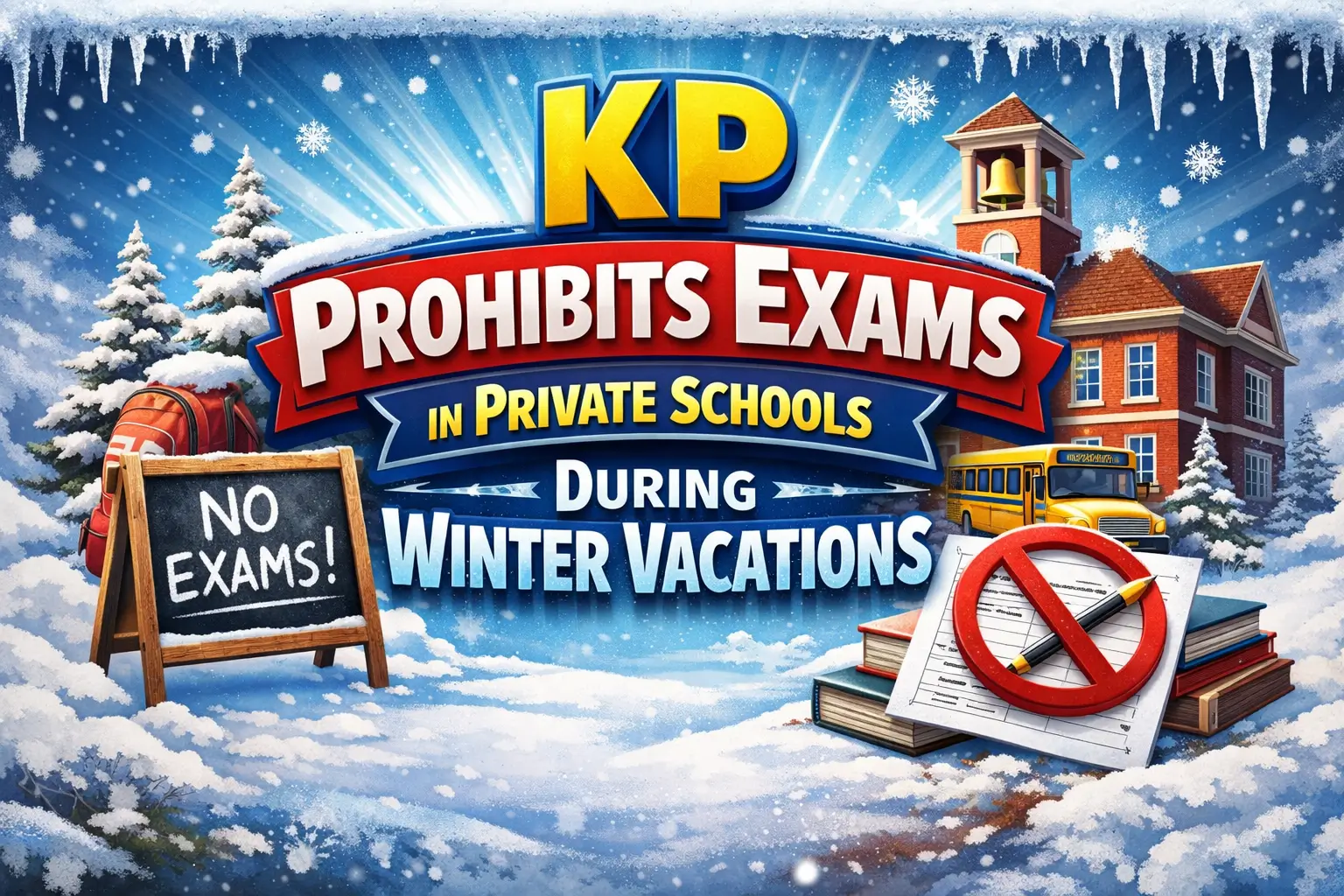
KP Prohibits Exams in Private Schools During Winter Vacations. The Private Schools Regulatory Authority (PSRA) of Khyber Pakhtunkhwa has issued a strict directive prohibiting private schools from conducting examinations during the winter vacation period. This decision aims to ensure students’ safety, maintain academic discipline, and prevent unnecessary stress on students and staff during the holiday season. The authority emphasized that all private educational institutions must comply with this order immediately.
Winter Exams in Private Schools: A Violation of PSRA Directives

On December 26, 2025, the PSRA released an official notification highlighting that some private schools had scheduled exams during the winter break, contrary to previous instructions. The authority considered this a violation of the established guidelines and directed all schools to cancel any planned examinations during the winter holidays without delay.
The notification warned that strict disciplinary action would be taken against schools failing to comply. Such action would be implemented under the KP-PSRA Act, 2017, and the regulations framed in 2018. PSRA reiterated that no private school or institute is permitted to conduct exams during this period, and all previously issued instructions must be followed without exception.
Winter Holiday Schedule in Khyber Pakhtunkhwa
The Khyber Pakhtunkhwa government has already announced the official winter vacation schedule for schools. The timing varies depending on the climatic zones:
- Summer zones: Schools will remain closed from January 1 to January 15, 2026.
- Winter zones: Schools will observe a longer break from December 22, 2025, to February 28, 2026.
This schedule considers harsh weather conditions, such as dense fog, snowfall, and low temperatures, particularly in hilly regions. By adjusting school closures according to climatic zones, the government aims to protect students and staff while minimizing disruption to the academic calendar.

Importance of Compliance for Private Schools
The PSRA’s directive is a reminder that private schools are required to follow regulations to maintain the quality and integrity of education. Conducting exams during the winter break not only violates legal directives but can also affect students’ well-being, especially in regions prone to severe weather. Schools must adhere strictly to the guidelines to avoid penalties, which could include fines, suspension, or other disciplinary measures as per the KP-PSRA framework.
Conclusion
In conclusion, the PSRA ban on winter vacation exams is a step toward safeguarding students’ safety and ensuring adherence to educational regulations in Khyber Pakhtunkhwa. Private schools are advised to cancel all exams scheduled during the winter holidays and strictly follow the PSRA and government guidelines. By doing so, schools can protect students from unnecessary risks and uphold the integrity of the education system.

Frequently Asked Questions (FAQs)
Q1: Are private schools allowed to conduct exams during winter vacations in Khyber Pakhtunkhwa?
No, the PSRA has explicitly prohibited all private schools from holding examinations during the winter vacation period. Schools found violating this directive may face disciplinary action.
Q2: Why does the winter holiday schedule differ for summer and winter zones?
The schedule varies to account for local climatic conditions. Winter zones experience harsher weather, including heavy snowfall and dense fog, requiring longer school closures for the safety of students and staff.

Q3: What penalties can schools face for ignoring the PSRA directive?
Schools that conduct exams during the winter break may face strict disciplinary action under the KP-PSRA Act, 2017, including fines, suspension of operations, or other penalties determined by the regulatory authority.
Q4: Where can parents and students check official notifications and results?
The official notifications and results gazette will be available online and at board offices after the announcement, ensuring transparency and accessibility for all stakeholders.